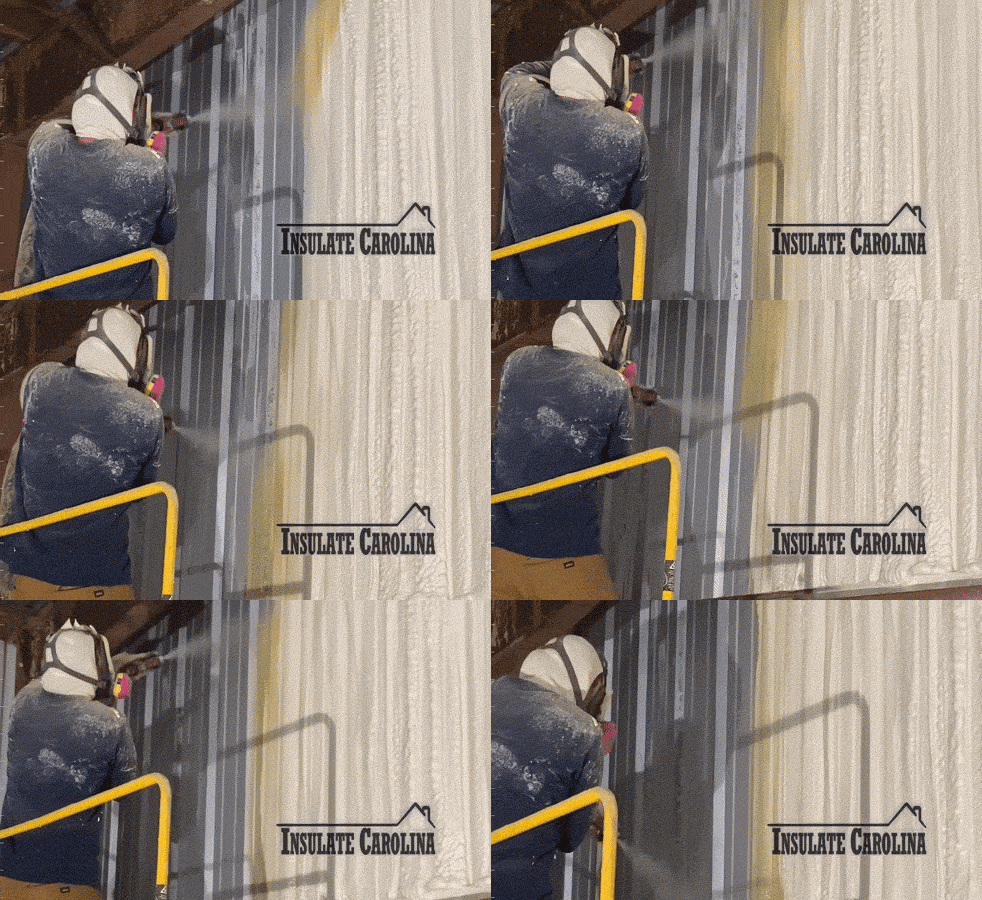
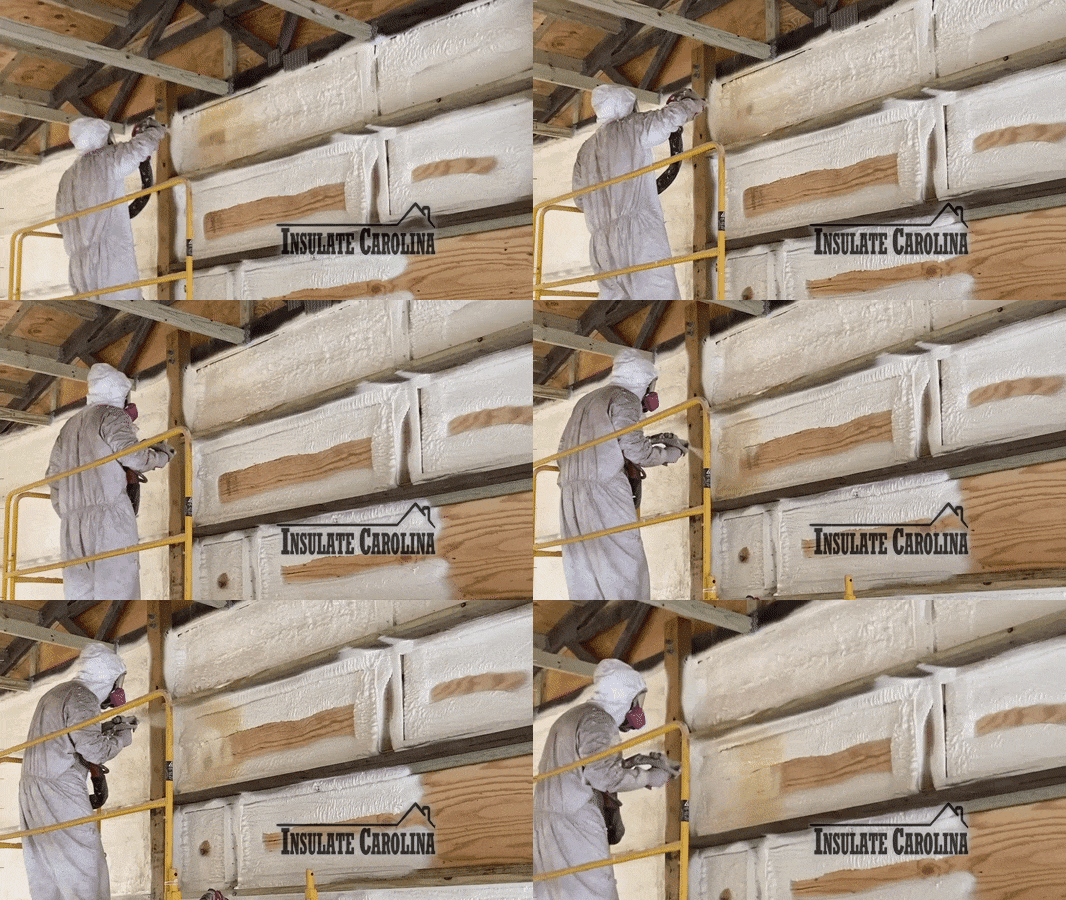
We provide expert insulation services for all existing residential and commercial construction, as well as new construction projects throughout South Carolina.
COMMERCIAL
RESIDENTIAL
CUSTOM

Providing Innovative Insulation Solutions Since 2017
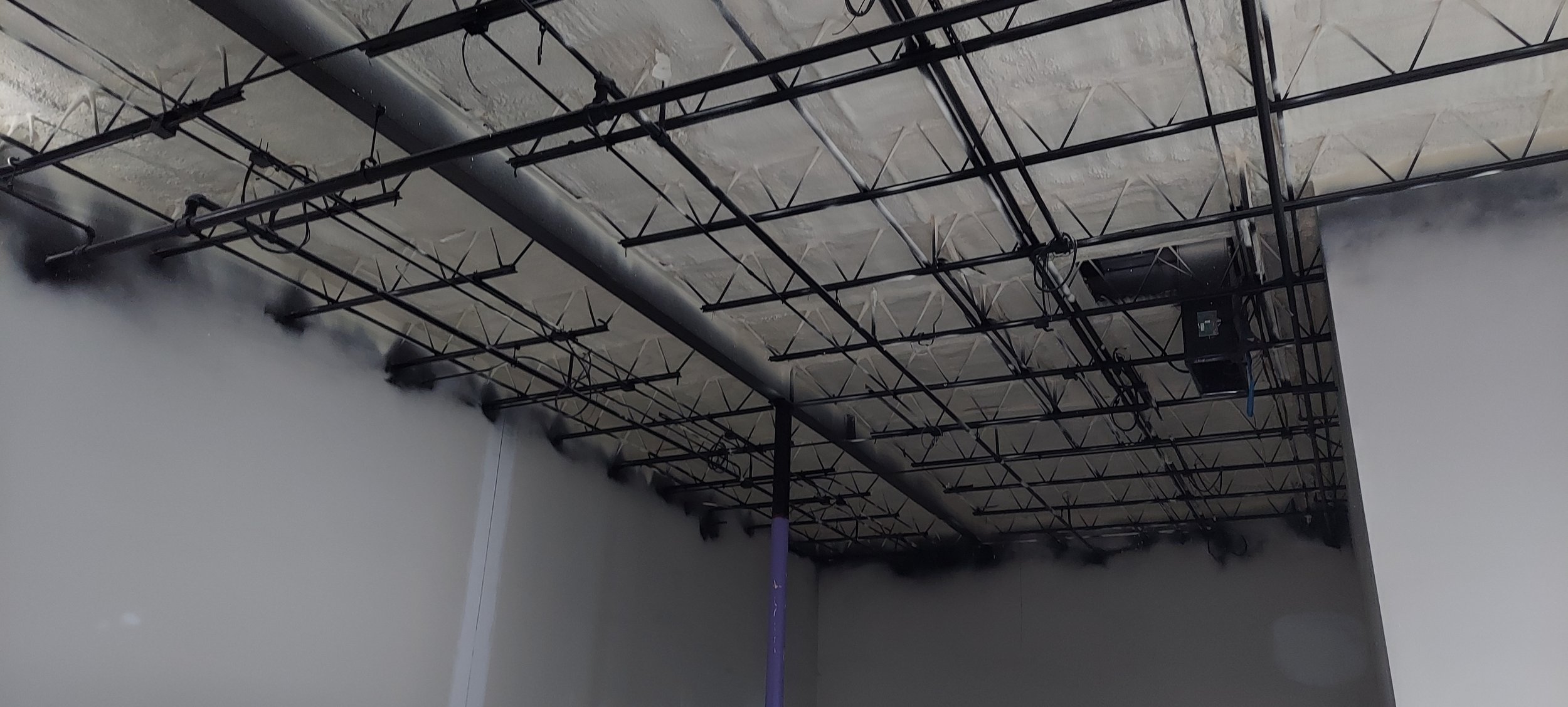
COMMERCIAL

RESIDENTIAL

CUSTOM
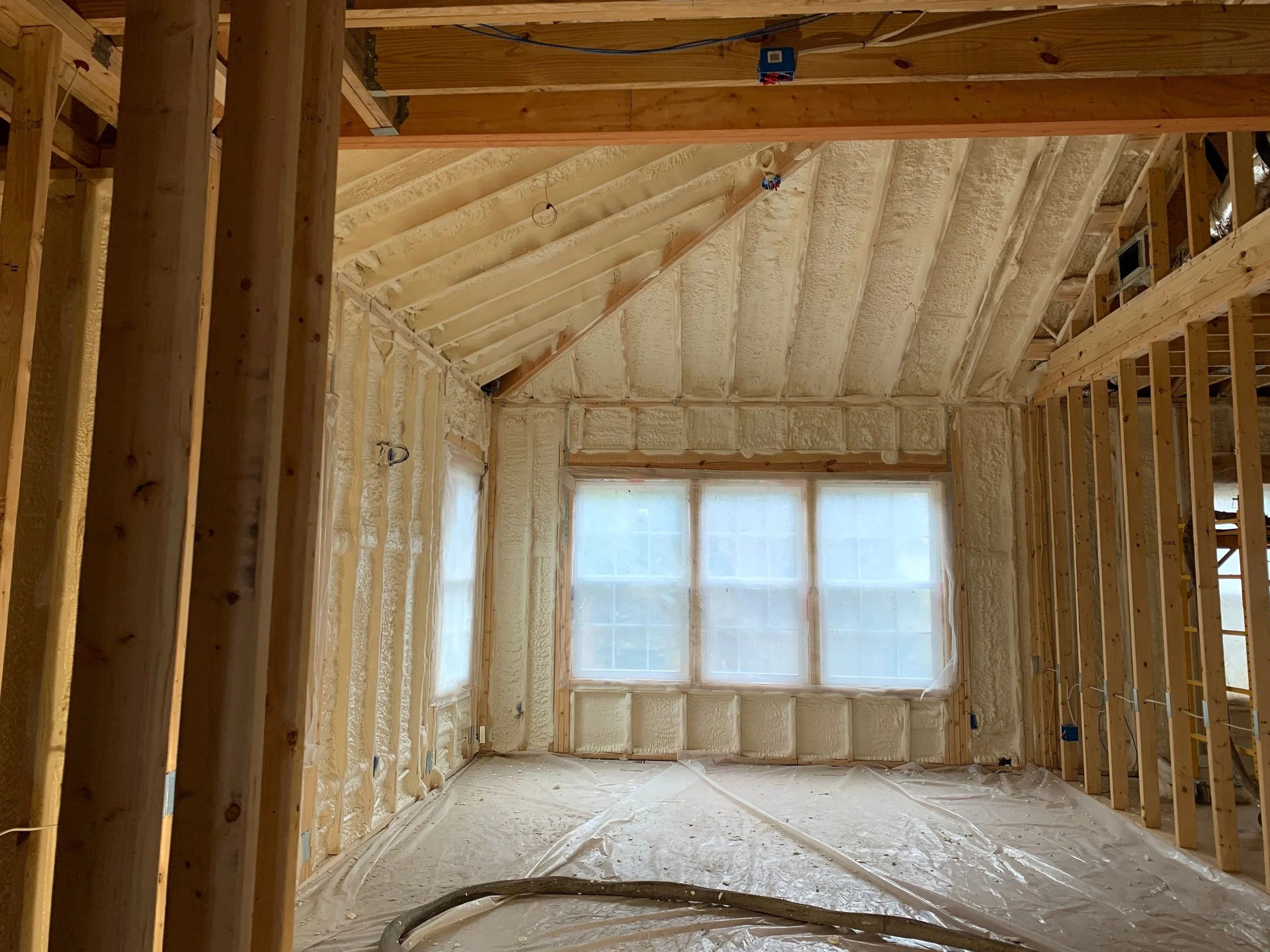
Spray foam is applied as a liquid and quickly expands, creating an
air tight seal.
Spray foam is also self-supporting, which enables its use on the underside of roofs and floors.
Spray foam insulation can reduce energy bills by up to 40%.
Spray foam outlasts fiberglass batts and has a return on the investment average of 4 years.
Spray foam offers opportunities to lower maintenance costs on roofing systems.
Homeowners, builders and architects may be able to qualify for tax incentives, rebates, grants or certifications.
Spray foam insulation creates a complete air-tight seal, preventing drafts and providing better indoor temperature control. Good indoor temperature control can have a dramatic effect on household comfort.
Spray foam can serve as a sound barrier, making your home or office a more peaceful environment. Open cell foam can reduce high frequency noise, and closed cell foam can reduce low-frequency noise.
Sealing gaps with spray foam can provide a barrier against pollen, dust, and insects. Reducing external allergens can be especially helpful in households with allergy sufferers.
According to the National Association of Home Builders spray foam insulation adds 75% to 200% STRUCTURAL STRENGTH to your home, given its high compressive / tensile strength and its ability to act as a bonding agent.
Clemson University’s research shows that spray foam can significantly improve the attachment of roof sheathing to trusses and rafters, similar to the way construction adhesives help bond a floor system together.
Spray foam is a long lasting solution which does not require replacement, unlike fiberglass batts which degrade over time in the presence of moisture or animal activity.
Energy-efficient products like SPF can help builders earn credits for green building certification programs and other sustainability standards.
Spray foam insulation creates a highly efficient building envelope enables buildings to be heated and cooled with the least possible consumption of the natural resources reducing the carbon footprint of your home by 40% or more.
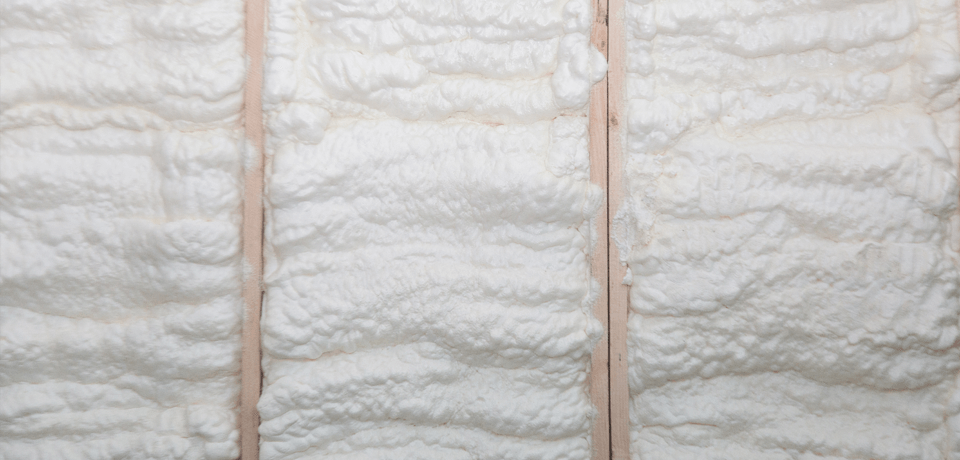
What is Spray Foam?
Spray polyurethane foam (SPF) is a spray-applied plastic that forms a continuous insulation and air sealing barrier on walls, roofs, around corners and other surfaces. SPF insulation is resists heat transfer extremely well and offers a highly effective solution in reducing unwanted air infiltration.
Professionals combine two liquids to initiate a chemical reaction that creates foam. These liquids arrive at the job site in separate 55 gallon drums and are typically referred to as the “A” side and “B” side. After spray foam insulation is cured, it’s considered to be relatively inert. This means the chemicals are finished reacting.

According to the EPA, as much as 40% of a building’s energy is lost to air infiltration.
Air leaks that waste energy and drive up utility bills can be filled with spray foam. Spray foam expands in place to insulate and seal the spaces seen and unseen. This unique application process allows spray foam to create a layer of protection that provides a consistent air seal for any wall, roof, ceiling, or floor.
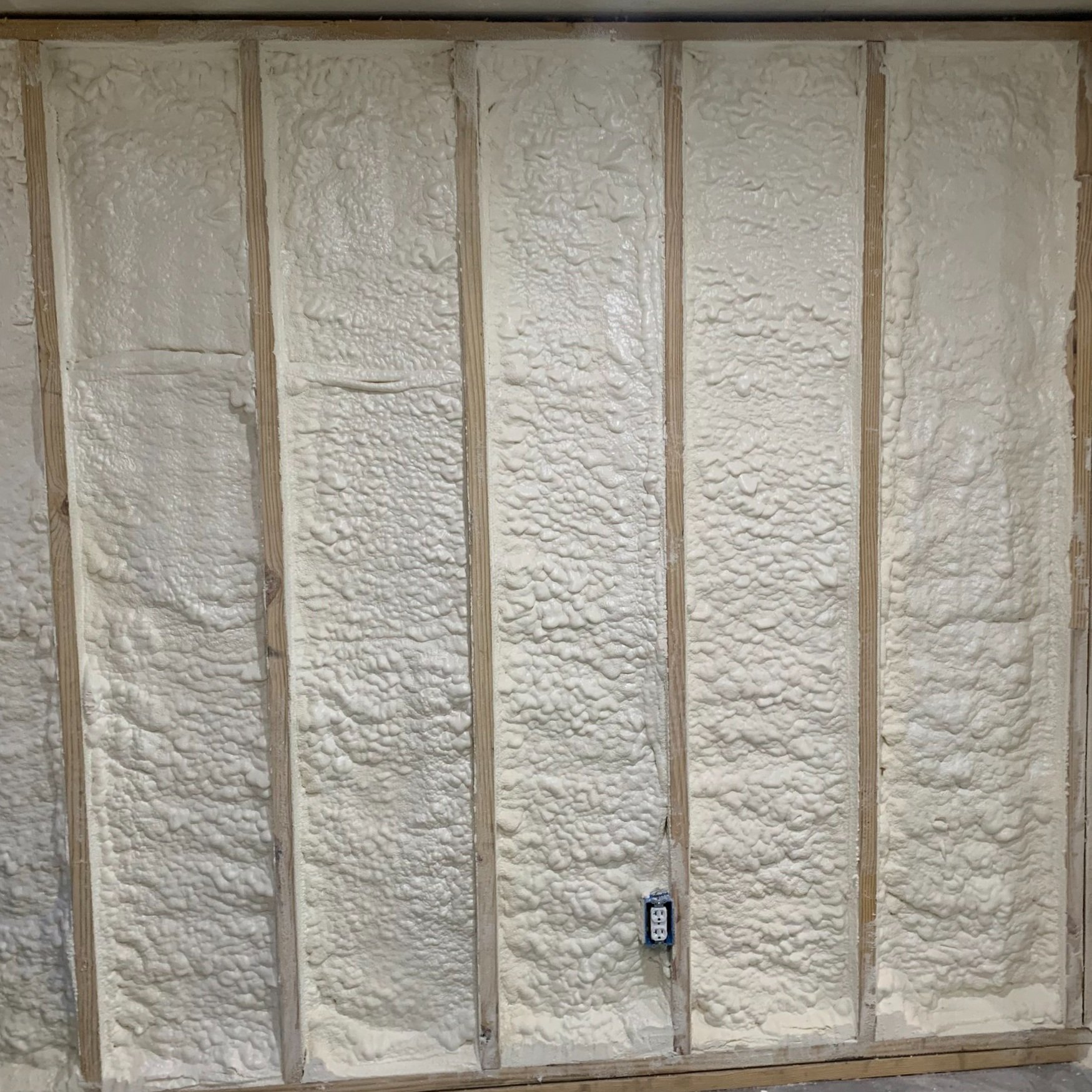
Applying closed cell spray foam in wall cavities improves building durability.
This is due to its ability to conform and adhere to the surface upon which it is sprayed. A wall with spray foam insulation is better able to maintain its shape under duress than a wall assembly without spray foam.
Communicate Specific Needs: Discuss specific areas or challenges with the installation team beforehand. Clear communication will help achieve the best results.
Inspect and Repair: Conduct a thorough inspection of the area where the spray foam will be applied. Address any existing issues such as leaks, mold, or structural damage prior to installation.
Clear the Area: Foam will leave a residue on any surface it touches. Remove furniture, decorations, and any personal items from the space where the installation will occur. Ensure that there is a clear path for the installation team to access the areas needing spray foam.
On the day of install, expect a professional team to arrive promptly and prepared to work hard. The safety of our crew and clients is a top priority. We are equipped with personal protective equipment (PPE), including full face respirators, and we utilize a supplied air system to ensure healthy air quality. We ask that clients stay out of the space for no fewer than 24 hours after foam is applied. These precautions are essential in safeguarding everyone involved while delivering high-quality insulation services and minimizing disruption to your home.
We have been certified as Master Spray Foam Installers since 2019.
Select a title to view PDF in a new tab.